
Abstract
Journaling on the margins is a written contribution based on field observations from my MSc thesis fieldwork in the informal settlements of Nairobi, in May 2025. The research examined the housing affordability of a slum upgrading project in Kibera, Kenya’s largest informal settlement. Methodologically, it was grounded on semi-structured interviews with residents of the social housing project and spatial observations of their living environment. To enhance research reliability, I kept a research diary reflecting on my fieldwork experiences, which finally included useful observations regarding the everyday life of the urban poor in Nairobi. The notes captured various practices, from house chores to recreation, and uncovered important insights on family ties, gender roles, and community affairs. Moreover, they described the challenges of conducting fieldwork as a female researcher, the effort behind hosting a participatory design workshop, and the ideological background of academic work. The written material was combined with pictures of Kenyan urban and rural landscapes, primarily outside the settlements, for ethical reasons. The final piece creates a diverse portrayal of the Kenyan urban struggles, drawing from a nuanced parallel between my own cultural background and the Kenyan realities I investigated.
Keywords
Introduction
As suggested by academics, researchers should keep a diary of their visits to the field to document their observations (Bryman, 2012). As suggested by psychologists, a diary is a useful tool for one to revisit their thoughts and feelings in periods of emotional turmoil (Harrington et al., 2018). As suggested by my friend Sofia, keeping a diary is one of the best presents she ever did to herself. According to me, the diary is the most I can share about my 29 days in Kenya.
The characters
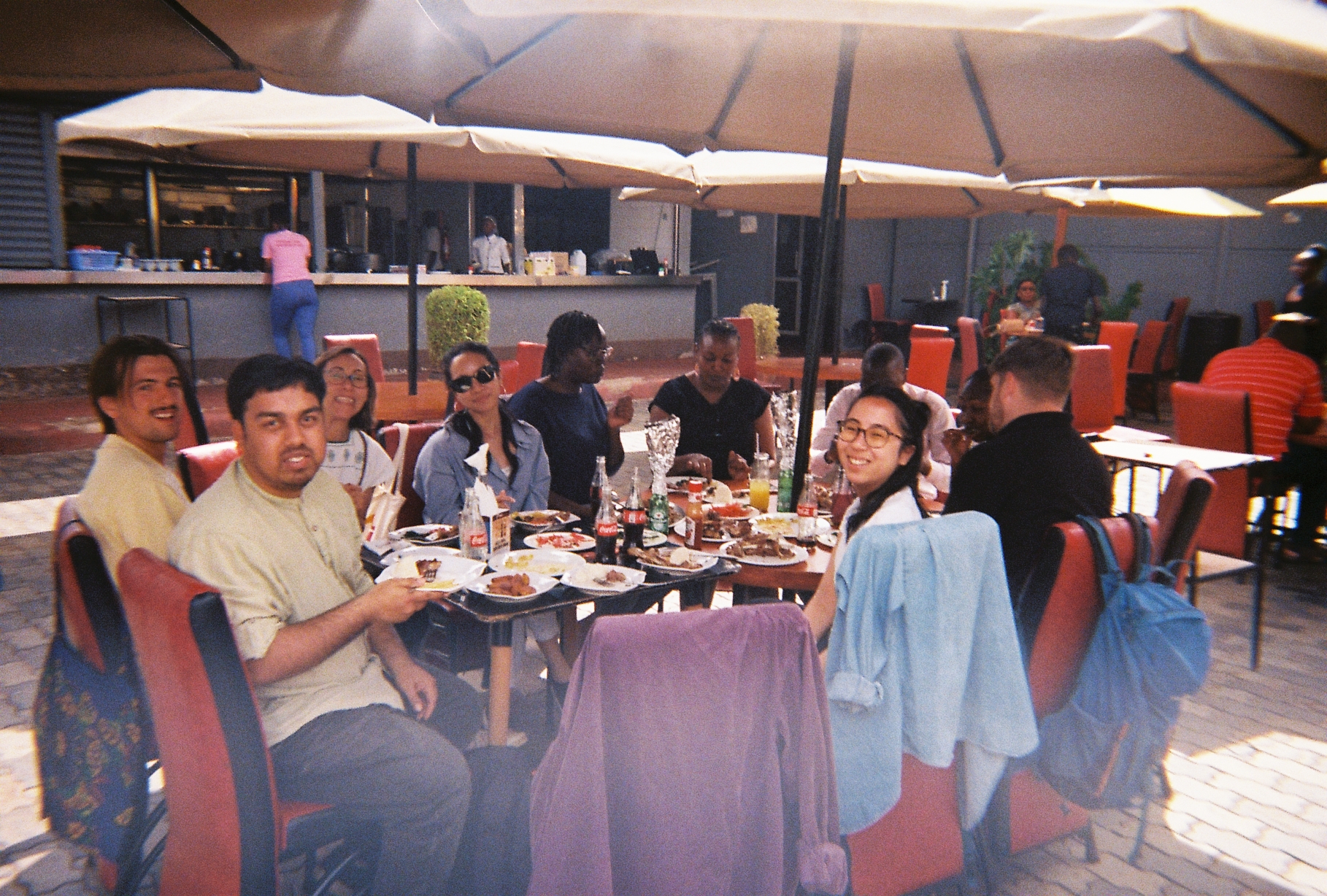
The characters of this story are six aspiring urban researchers who conducted their thesis fieldwork together in the informal settlements of Nairobi: Mathare, Kibera, and Mukuru. For my research, I interviewed residents of a social housing complex that was built on a cleared slum area. I also ate plain rice for 5 days in a row. Abhishek stayed in Mukuru after sunset to finish all his interviews. He also really missed Indian spices in Kenyan food. Beatrice delved into the pain of single mothers that were affected by the flood in Mathare. She was also adored by her interviewees because they often shared the same name. Boris participated in protests for fire safety during his first week in Nairobi. He also spent his last day in the city playing football with his interviewees. Dakota navigated the change that young entrepreneurship can bring to an informal settlement. He was also greeted by the Mathare kids like Jesus Christ. Sarah asked questions on how abandoned the slum dwellers felt by their government. She also went to a porridge feeding for the kids of Mathare right after arriving from the airport.
The plot
Monday, 05/05
Today is the first day I am keeping a diary. That's one of the surprises life was saving for me. I would never live in Nairobi, it's a place you can only enjoy in pictures. I come from the Balkans, and if Balkan people find a beautiful spot in the city they want to take a cigarette break there. Here you can neither take a break nor smoke a cigarette. I feel tired, but I can cope by doing slightly less than the others, without suffering the consequences of missing out. Fatigue is only bearable if you accept it. The nature here is amazing, as if the most beautiful flowers of the world gathered in this city. The people feel so pure and kind hearted, too. Back home, I don’t know if people would treat me so nicely if they knew I had so much more than them. I don't exactly feel safe here either but I know I am, and this is very important to me. This has a lot to do with the support I receive from my peers; they make my life easier and more pleasant in any possible way. Tomorrow will be my first day at the slum and I am calm, mostly because I want to sleep. All these words come so easily now. How I wish I could write my thesis just like that!
Tuesday, 06/05
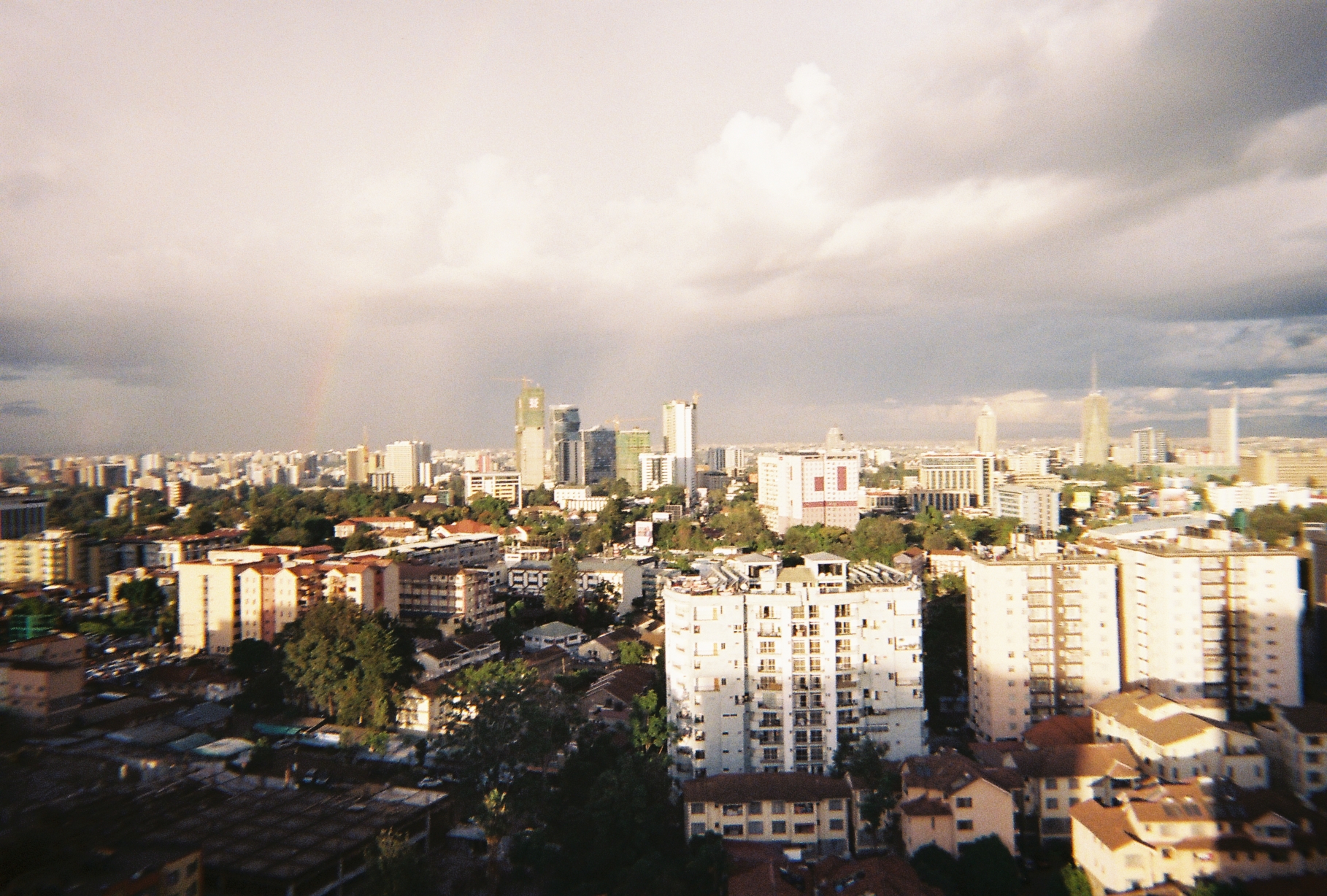
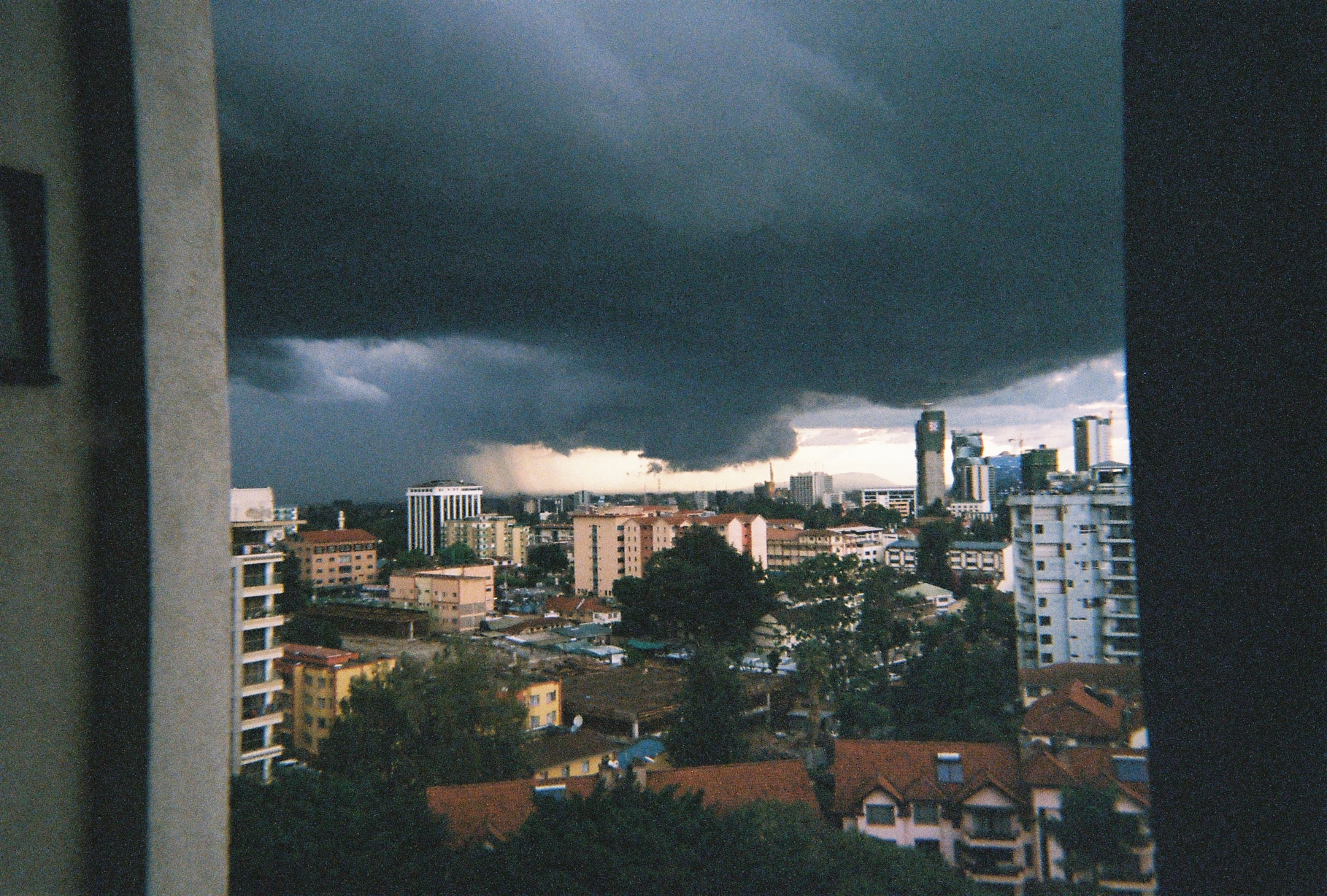
First visit to the slums. We all went to Mathare and everything went smoothly. I feel less anxious with every cab ride we take because I observe from the window. This city is a lie aside from the slums. Everything looks unnatural. The city center is located at a giant Asian interchange. Buildings are guarded, security checks your bags, you even pay to enter parks, life is artificial. So far we have only passed from the center and I am very curious to see where the street numbering starts from. I think that when I talk about Greece, I present it a bit as a third-world country and that is slightly unfair. At least life there is humane. My peers are shocked by the fact that everybody knows each other in the slum. For me, that is exactly what village life feels like in Greece, even though urban life is more alienated. Everything in the slum reminds me of stories of my grandparents. If you work at a super-market you are a king, the poor kids are recruited by the army, and the vulnerable don't want to be given houses; they want to build and adorn them by themselves.
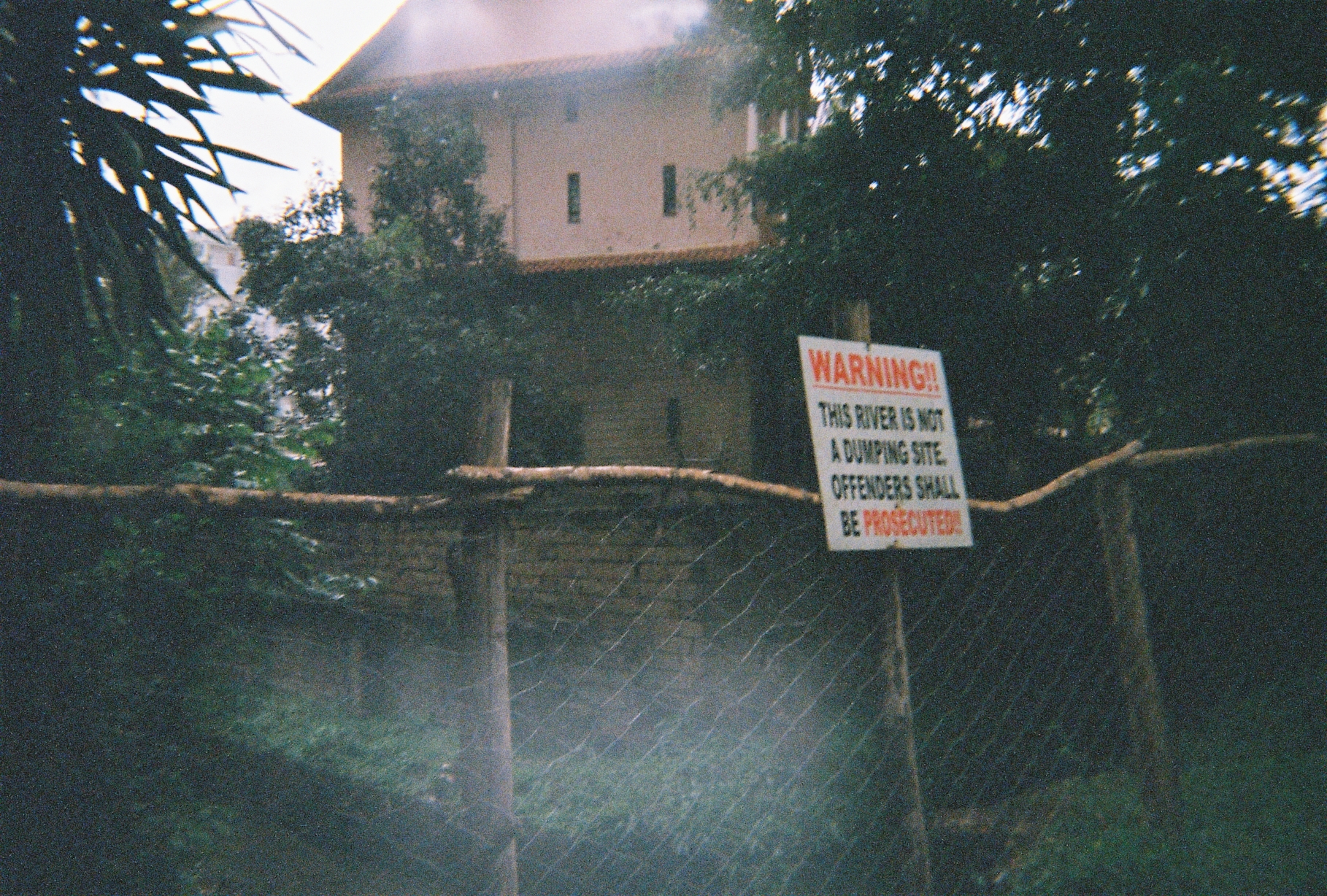
Mathare has a river that floods and kills people every year. At the banks, you can see the remains of the houses that were washed away by the flood, the mountains of trash where the hens, goats, cats, and dogs roam around, and the little parks and playgrounds the community has built for themselves. The water has a strange, dark, blue-gray color. I told Abhishek I find this color very attractive. I think he urged me to focus on the dreadful smell and reconsider. During our visit to the villages, we had local people to protect and guide us. My guide was a rapper; very kind; he wasn't talking too much, so I had the chance to observe. At some point, he told me that people in the slum were free. Was he referring to poverty? To the British? I am not really sure. The same for their animals. They roam freely during the day and sleep under their masters during the night. I believe that the punishment for the poor around the world is to live among their own trash.
Saturday, 10/05
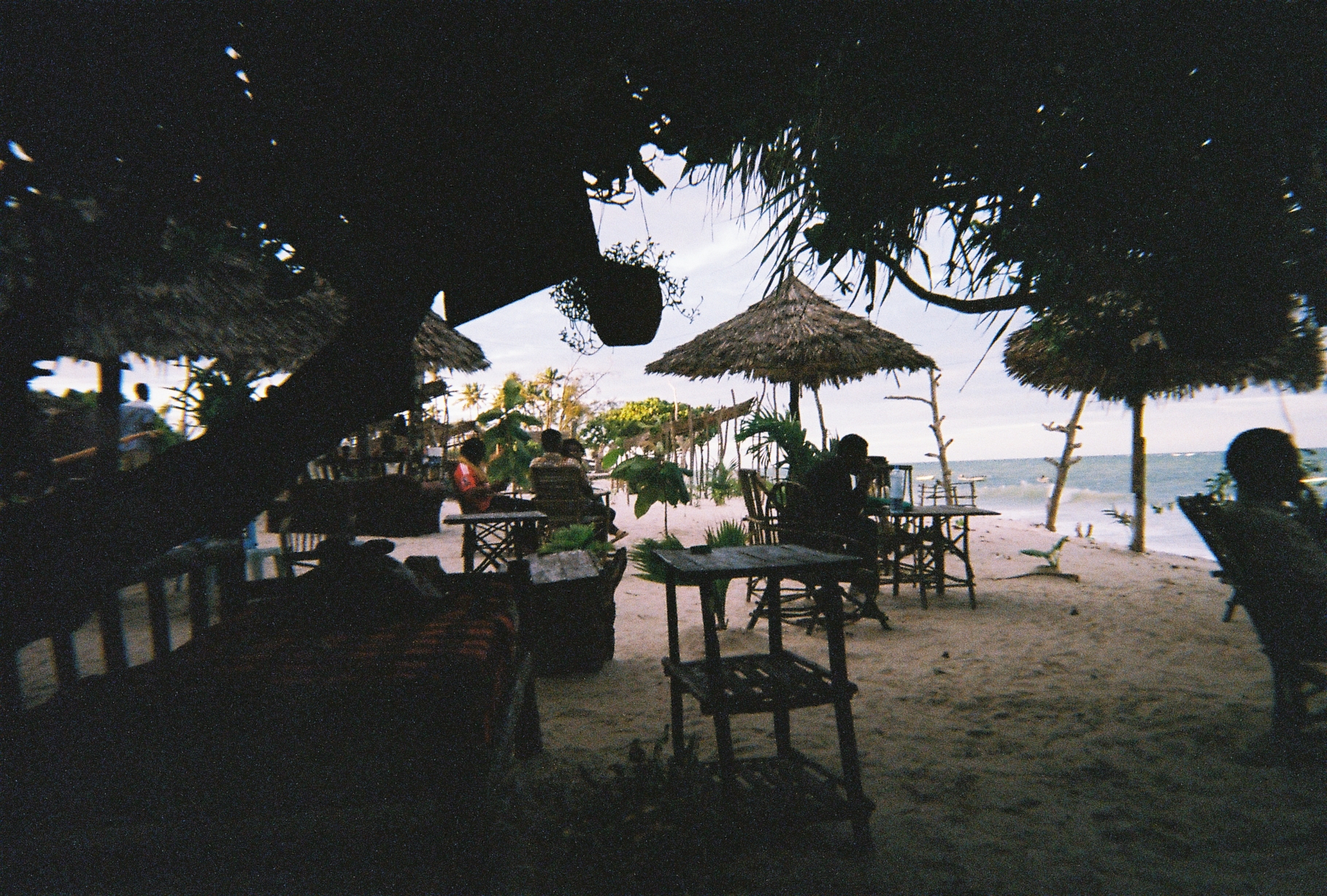
Mathare reminds me of my village. Outside their houses, residents create little yards with all sorts of decorations. When I look closely, I notice a cola bottle that has been cut, painted, and repurposed into a flower vase. My grandma does exactly the same. For her, plastic is a good and strong material that is meant to be preserved. Like the tin box of biscuits where she stores her sewing supplies. I recently realised that grandmas in Latin America do the same with their biscuit box. People are also very religious. They mention God a lot, asking things from him, being grateful for others. I only see a very big difference between Mathare and my village. Nobody smokes here! My friend Lydia was shocked! Are the movies lying to us? Don't all the poor people of the world smoke? How do they survive? Since we were children, we were taught that smoking is the way to express our pain, our fears, our stress, our anger, our joy. My dad calls it one of his best friends. I wonder who their best friend is.
Sunday, 11/05
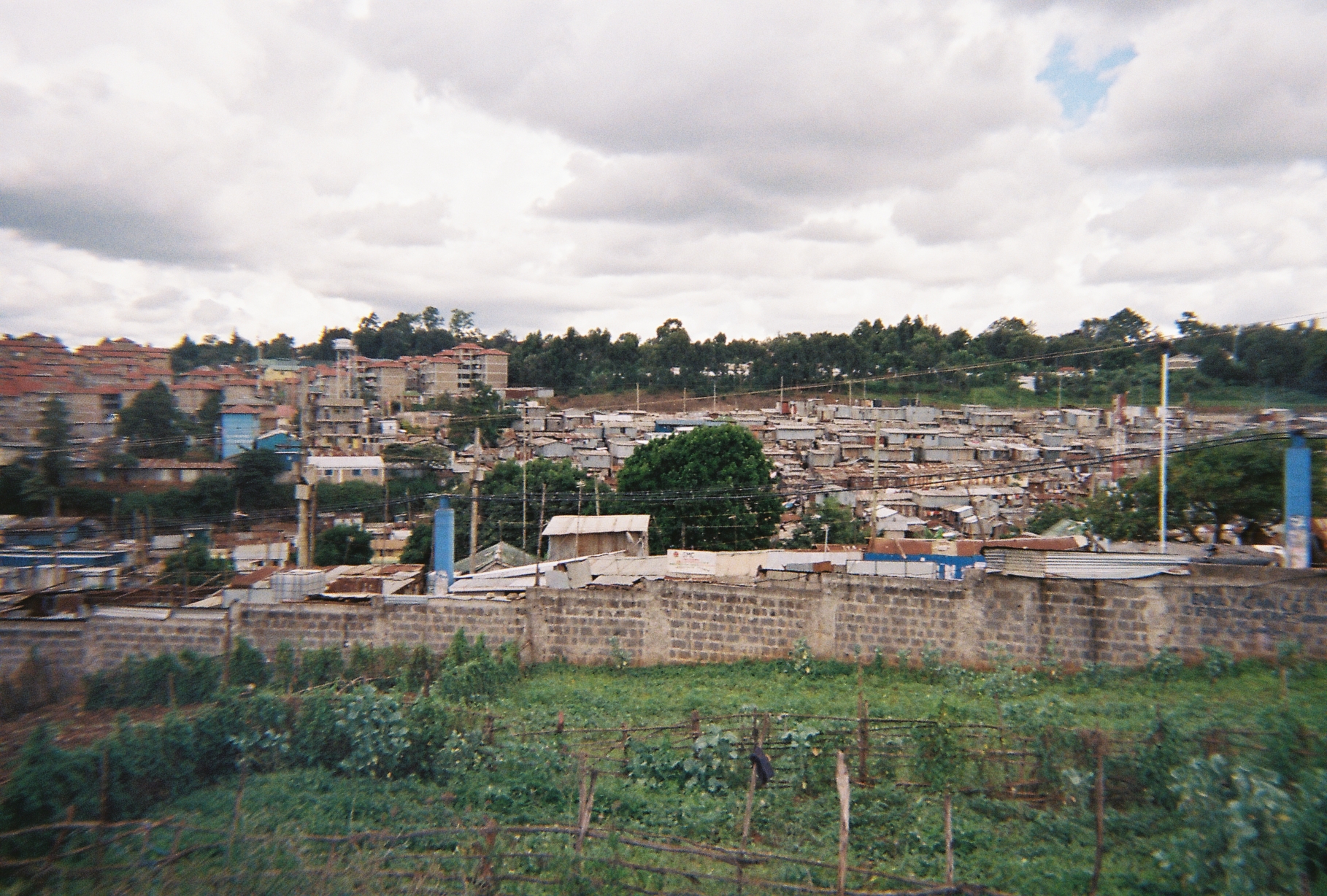
Today I visited Canaan Estate. The Estate is the result of the first phase of a slum upgrading development in the Soweto village of Kibera (Zone A). The process started with the enumeration of households in 2004, followed by slum clearance and temporary relocation to a nearby site. The Estate was inaugurated in 2016. I have to admit I really liked it there, it felt like a healthy environment. The houses weren't crammed, as they are in the slum; there was free space and vegetation. Still, many people that are given houses there, sublet the apartments and go back to the slums. Even though I try to understand the priorities behind that decision-making, I believe that, to live with dignity, one needs a private space that is not confined by iron sheets that make your blood boil during the heat. A different material is needed; one that gives the chance to make openings that let the sunlight and the air in. One also needs a bathroom and a clean place to cook and do their laundry; and in Canaan Estate, I saw all of these things. Nevertheless, it makes me sad that for this to exist, there needs to be a fence and security guards, but I think it is unfortunately necessary. Last but not least, Canaan people don't care about parks.
Monday, 12/05
Today I witnessed the balconies that people turn into rooms. This informal practice is very common in Greece and people pay a fee to legalize them. However, the ones I saw in Canaan didn't look comfortable at all. I think the balcony was 1m * 3m. The bunk bed could barely fit and one interviewee told me that you always need to keep the windows open so as not to suffocate. As Boris pointed out, "not to suffocate" referred to her children because the balcony is their room. The bathroom was elegant, but the kitchen was very narrow. The bedroom was fine in size and the sitting room was quite small. The beds had mosquito nets and the house was filled with flies that came from the trash. It sounds insane, but they haven't collected the trash in 4 months! A fly flew right into my cup of tea. Two ladies told me that they have to be aware of exactly where their kids go to play, because if they go close to the trash, they might get cholera."Not to suffocate" and "cholera" shocked me. I also got to see the contrast between the Kibera slum, Canaan Estate, and Zone B from many different perspectives. Zone B is the second phase of the programme, which consists of ten-floor concrete buildings. As I confirmed with site visits, Zone B is built on an existing waterway and the buildings are too tall to be that close to each other.
However, the most shocking finding is that women breastfeed their kids until they are two years old; fully grown kids that walk and talk. It's tyranny to have a child hanging from your breasts for so long. My grandma, born in 1945, was breastfed until she was four. How do you wean the kid from breastfeeding? What kind of impact does the memory of biting their mother’s breasts have on them? Is it only a poverty reflex or is there more to it? Then, according to local social norms, is this kid supposed to go live alone when they become a teenager? When did they get to that level of independence? Bea keeps a diary, too, and she gives me stickers to make its pages look prettier. Today I didn’t take any.
Tuesday, 13/05
Today I did five interviews and I almost left a period stain on the couch of my dear hostess. By the end of the day, I was so exhausted that all the conversations were mixed in my head. The first house I went to made me feel like I was in the movie "Time of the Gypsies". Since I haven't watched the movie, I will say it looked like my grandma's old house, that again I have never visited, but it lives in my fantasy. The people I interviewed made me feel young and silly; partly on purpose, but mostly because this level of poverty is hard for me to grasp. The beneficiary interviewees did not care at all about my questions regarding resettlement stress or whether their rooms have access to direct sunlight from these tiny windows they have built for them. I believe they don't care about issues like proper ventilation or the quality of the new housing in Zone B. They would care more, but all these sufferings are hard to cope with, so you need to sweep some under the rug.
Thursday, 23/05
When we arrived at the airport in Nairobi, locals started chatting with us. One man asked me where I am from and I replied: “Greece”. He told me the only thing he knew about Greece is that there was a direct flight from Athens to Nairobi until 1993. Olympic Airways, how fancy! I bet people were smoking and eating with silver cutlery on that flight. I think this was the only person I talked to on this trip that knew something about Greece. An unprecedented experience! Greece might be tiny but it has the Parthenon and Santorini and mythology and everybody knows it; to such an extent that it makes me feel guilty when I don't know the birthplaces of other people. I thought it was a unique opportunity for me to interact with people that have no predisposition about where I am from. But then people thought I was Dutch, because I am white and study at a Dutch university. How the universities of the Netherlands love Kenya! When I was walking around with Sarah, people thought we were Japanese. Sarah played along and I loved it. With Bea, they thought we were Chinese and Bea hated it. The community researcher I collaborated with asked me whether we have slums in Greece. We do, but they look different and are way smaller. Normally they are associated with Roma populations. No matter the differences, in both cases, it feels like the poor are being punished for their poverty.

Sunday, 26/05
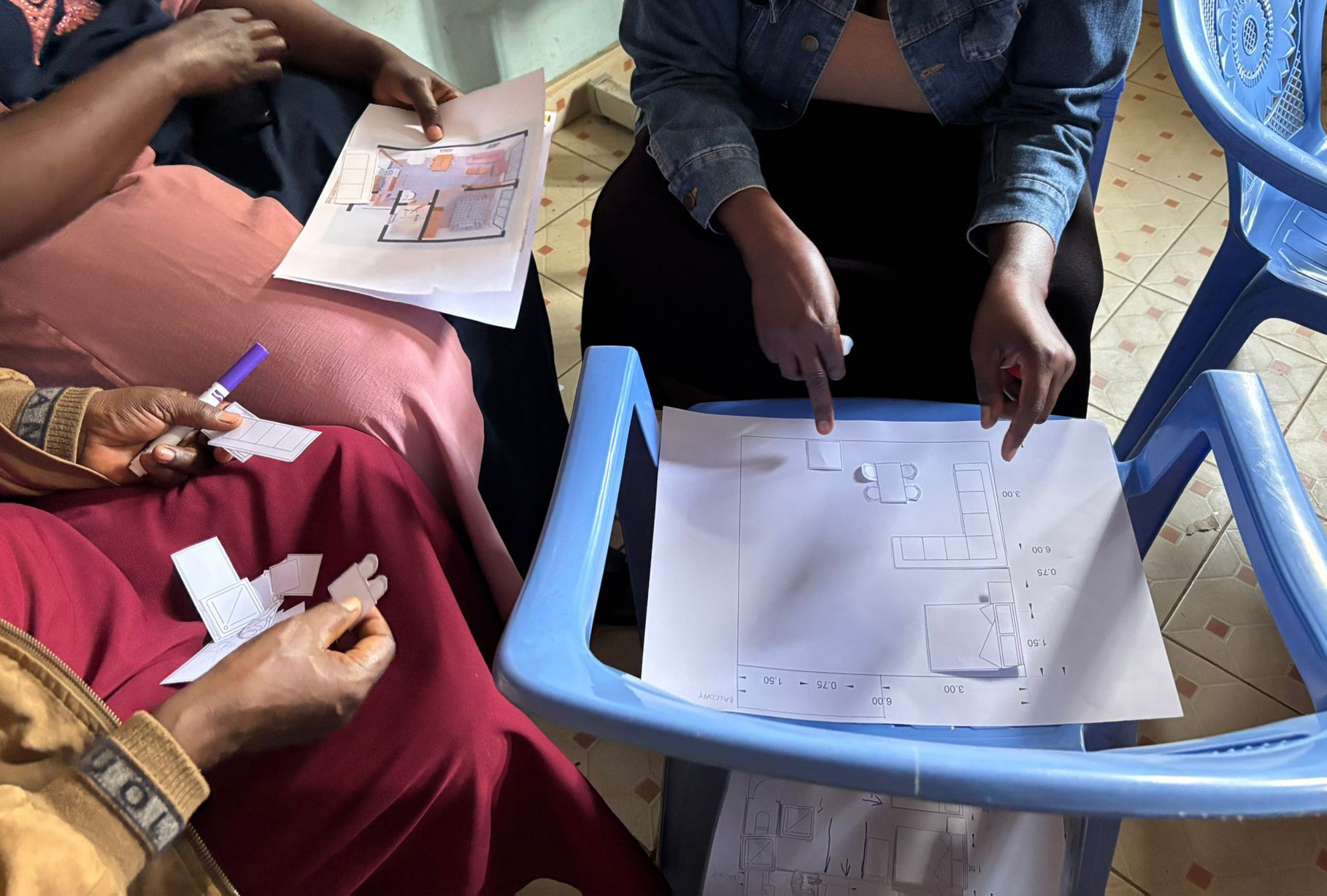
After the fieldwork, I thought about concluding with a workshop for my interviewees to express how they would change their apartment interior, if they had the chance. Normally, these things go terribly because people are bored to engage in architectural exercises. I was prepared for that possibility and having Bea with me was a great relief. People were very late, but finally the process went faster naturally. At first, I presented my findings to them for validation. I noticed all of them nodding along, except for one interviewee who was looking at me with a smirk. When I confronted him about it, he said he agreed with my conclusions, though. I asked them about the jiko, the metallic houseware they use to cook with charcoal, and they told me they only use it outside. They said that if they use it inside the house, they open the windows. I don't know if that's true or they just didn't want to worry me. For all that matters, they know it's dangerous to inhale the smoke.
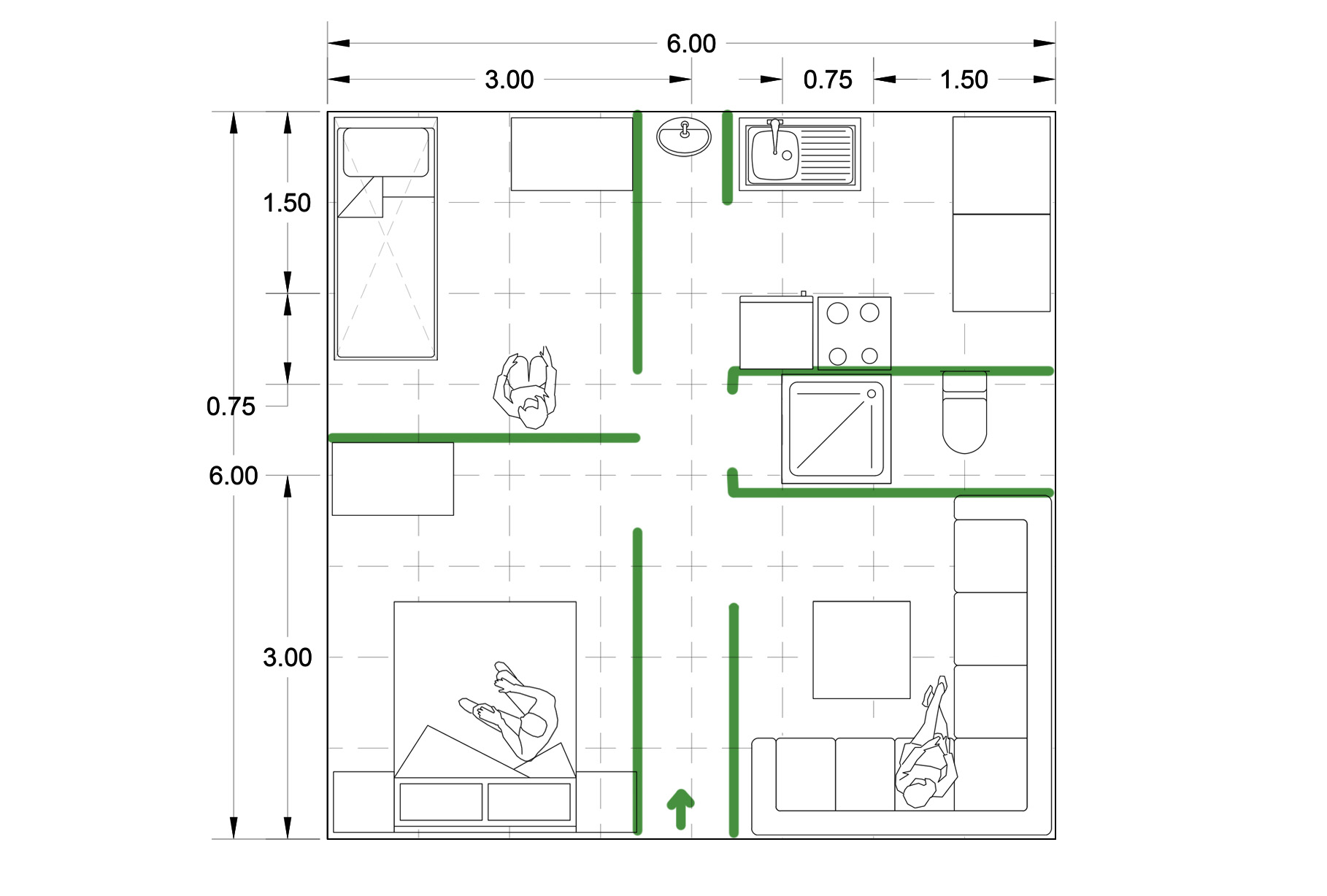
After the findings, I asked them to make a plan of their house by using the cut-out furniture and empty floor plans I had provided. It was so much fun because they were using the furniture in the most innovative ways, either ignoring it was a floorplan or pretending that the washbasin was a lamp. Afterwards they started drafting their own proposals. The (winning) team asked if they could design two rooms in 36 m2. I said yes. Then I told the rest of the teams they can make as many rooms as they want and one participant sarcastically yelled: "how will they even fit?". I said we would see about that. After this, the game changed completely. The two teams fit two rooms in the plan and the third team copied the plan of the new housing in Zone B that I had previously shown them. Two of the three teams proposed an open kitchen and the third team was finally convinced when one of the contestants explained: "you will have an extractor, it won't smell bad when you cook". I asked the green team if they think it's problematic that the bedroom they designed faces the communal corridor and they replied: "that's what curtains are for". They all enjoyed the little people cut-outs and, while presenting their proposals, they were narrating the story of living inside a fantastic home: "here is my husband reading his magazine on the sofa". The green team was working to win, using their mobile phone as a ruler for straight lines. The purple team designed one room and closed the balcony to create a second one. The other teams rejected that idea, so the “purples” had to defend themselves. "That's how we live now and we are fine with it." All interviewees participated actively by yelling at each other, laughing, fighting, and having some fun. When it was their time to vote, we warned them not to vote for themselves and they still tried to fool us. It was so funny when Miss Justice caught them red-handed! No need for cheating, they would have won anyways. Their ideas were very good and seemed mature. Maybe they had thought about how they would change their house before. I regret not making a prize though. I think it was a bit disappointing not to award the winners. But what did I know?
Thursday, 04/09
I am back in Athens, staying with my sister, Ermioni, and her dog. Today I woke up relieved. I got my period and I feel tired but not under pressure anymore. I think my life is like my menstrual cycle. I suffer silently (or not) until I can finally feel like a human being again. Then everything is put back into perspective.
Sunday, 06/09
Today is the second day I am spending alone at my sister’s place. Currently, transitions feel difficult for me. I am laying alone on her balcony, which is not exactly my happy place, but I feel so pleasant. The sky is clear and I don't mind that I can almost touch the balconies from across the street. I even find it charming that I am so close to the neighbours. Once again, I feel like when I arrived in Rotterdam for my Master’s, one year ago: new cycle. On the one hand, I feel exhausted and, on the other hand, I feel better than ever. I got this idea to make a story out of my diary notes. I think it's a good one.

Epilogue
I read a lot before going to Nairobi, but the fieldwork taught me that there are things you have to find out for yourself. Informal realities are so dynamic that changes are rapid and very localised. Academic writing follows universal rules and styles. As the time goes by, it becomes solid, it feels like it doesn’t belong to you anymore. The diary is mine. I go through its pages and I can even remember the clothes I was wearing that day and the effort I put into dressing appropriately. It is exactly that feeling of mild discomfort and awkwardness that fills me with pride. I made it! Because at the end of the day, all I wanted was to understand.
References
Bryman, A. (2012) Social research methods. 4th edn. Oxford: Oxford University Press, pp. 380–442.
Harrington, S.J., Morrison, O.-P. and Pascual-Leone, A. (2018) 'Emotional processing in an expressive writing task on trauma', Complementary Therapies in Clinical Practice, 32, pp. 116–122.
Acknowledgements
To Abhishek, Beatrice, Boris, Dakota and Sarah, for sharing this experience with me.
Author Bio
Vasiliki Apostolaki is an architect-urban specialist, with a specialization in urban housing and land justice. She has worked in architecture and urbanism firms in Spain and Greece, and has conducted community-based, participatory research in Nairobi. Parallel to her practice, she has participated in festivals, workshops and conferences as a performer, designer, and spatial researcher. Her research interests revolve around housing studies, urban governance, gender and education. Vasiliki aspires for her work to help in untangling urban injustices.
Recommended Citation
Apostolaki, V. (2026) "Journaling on the Margins: Field Notes on Urban Poverty and Informality in Nairobi", Everyday Life: International Journal of Public Culture, Art and Design, 1(1), pp. 1-16.
Article URL: https://articles.everydaylifejournal.uk/articles/field-notes/journaling-on-the-margins/
Copyright
© 2026 The Author(s). Published by Everyday Life: International Journal of Public Culture, Art and Design. This is an open-access article distributed under the terms of the Creative Commons Attribution-NonCommercial 4.0 International Licence (CC BY-NC 4.0), which permits non-commercial use, distribution and reproduction in any medium, provided the original work is properly cited. Everyday Life is an independent open-access journal with no submission or publication fees.